

Our website and destination management system run on a specialist platform designed and built to support the visitor economy, DestinationCore.
DestinationCore have unique vantage point on a question we hear often from our member businesses: "what does having a profile page on the destination website actually do for my business?"
Not in the abstract — in terms of how visitors actually find, plan and choose where to go.
We asked Will Wright, Managing Partner at DestinationCore, for his thoughts...
We all see how the role of destination websites, in attracting and inspiring visitors, has been changing ever faster over the last ten years.
The nature of search has evolved as the major search engines introduce their own place content and widgets on their results pages alongside the actual results.
New AI tools have quickly established themselves as the next chapter in this story and the roll of the website has again changed.
Destination websites are no longer just websites, they have become powerful tools to influence and engage with these new technologies and the content they offer their users.
A channel, not a listing
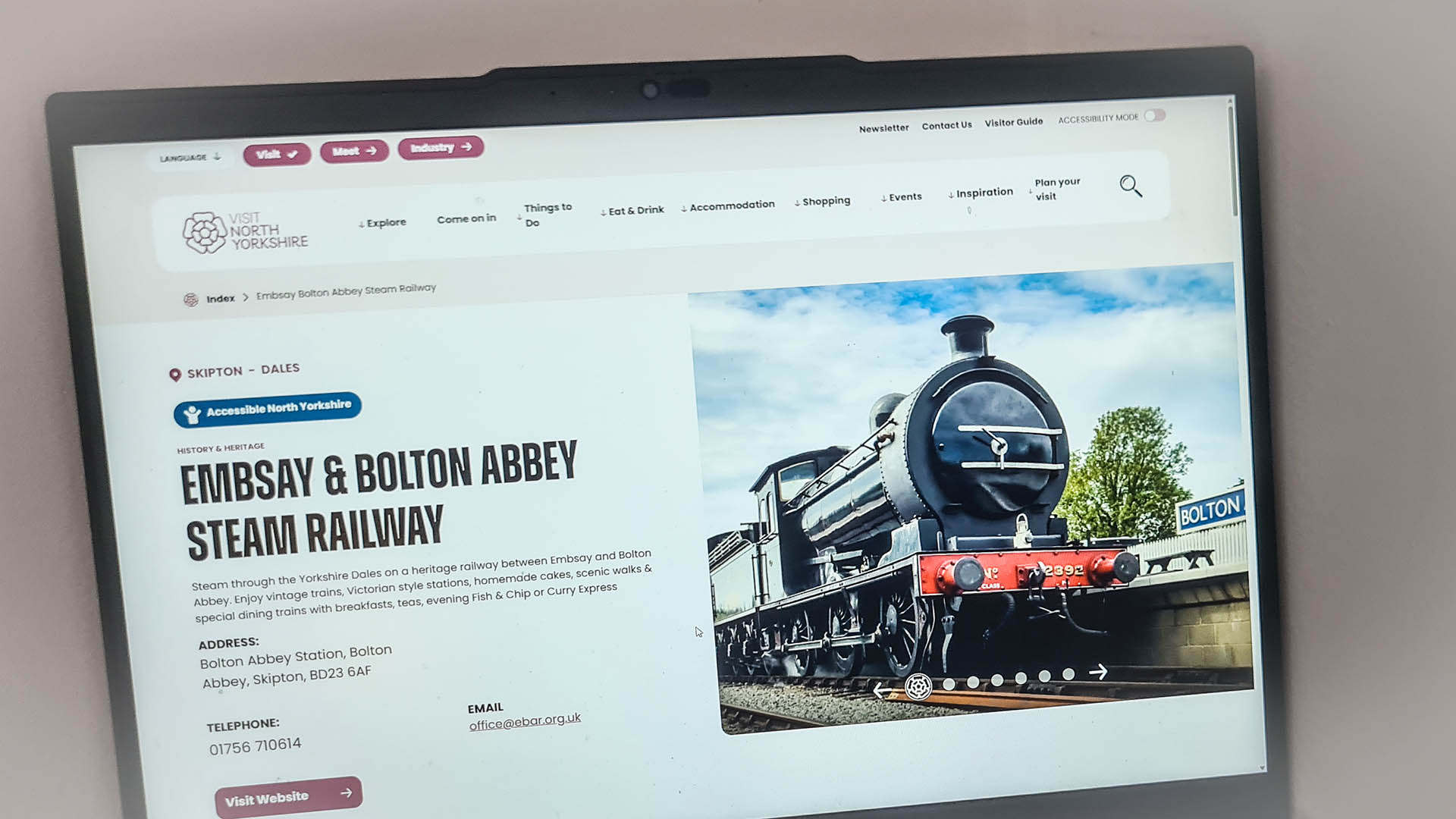
Think of your profile page in the way you'd think of a TripAdvisor or Expedia presence — a channel your customers already use to plan a visit, not a static entry in a directory.
The difference? TripAdvisor and Expedia are global platforms written mostly by strangers and algorithms. The destination website is a local source — content written by people who genuinely know the area, not generic or crowd-sourced copy. That local credibility is something the big platforms can't replicate, and it's something your own business website can't build at the same scale on its own.

Visitors plan trips, not single experiences
Very few visitors decide on one thing to do or one place to eat in isolation. They build a shortlist — somewhere to stay, a couple of places to eat, a few things to do — while in "planning mode," browsing broadly rather than searching for anything by name.
This is well evidenced: Expedia Group's Media Solutions team found travellers view an average of 141 pages of travel content in the 45 days before booking a trip — up from just 38 pages in 2013. People assemble a trip from dozens of sources; they don't make one decision at a time.
A profile puts you inside that shortlist-building process — appearing alongside complementary local experiences when someone searches "things to do in [destination]," not just when they search for you by name.
Search behaviour is changing FAST
Google's own data has shown "near me" style searches growing several hundred percent in recent years, with no sign of slowing.
A destination website — structured around places and experiences rather than a single brand or banner ads and clicks — is built to capture this kind of broad, location-based search. An individual business or local news site generally isn't.
Trust works differently for an official source
Personal recommendation is still the most trusted form of information there is — Nielsen found 92% of people trust recommendations from people they know over any other form of advertising.
An official destination website isn't personal recommendation, but it sits in a similar space: it's not a paid advert, and visitors, search engines, and AI tools increasingly treat "official, publicly-run source" as a different category of trust to a commercial website.
Visitors, search engines, and AI tools increasingly treat "official, publicly-run sources" such as DMO websites as a different category of trust to a commercial website.
Schema tells search engines and AI tools exactly what the content is: "this is a restaurant, this is its opening hours", "this is an event with this date and location."

AI-generated summaries pull information from sources that are clearly structured and well-marked and therefore easier for them to "read"
Why the technical setup (schema) matters
Schema is a bit of hidden code added behind the scenes of a webpage. It doesn't change what a visitor sees — it tells search engines and AI tools exactly what the content is: this is a restaurant, this is its opening hours, this is an event with this date and location.
Without it, a search engine has to guess what a page is about by reading and interpreting the text — and it doesn't always guess right.
With a properly applied schema there's no ambiguity, so your information is far more likely to be understood, trusted, and reused correctly.
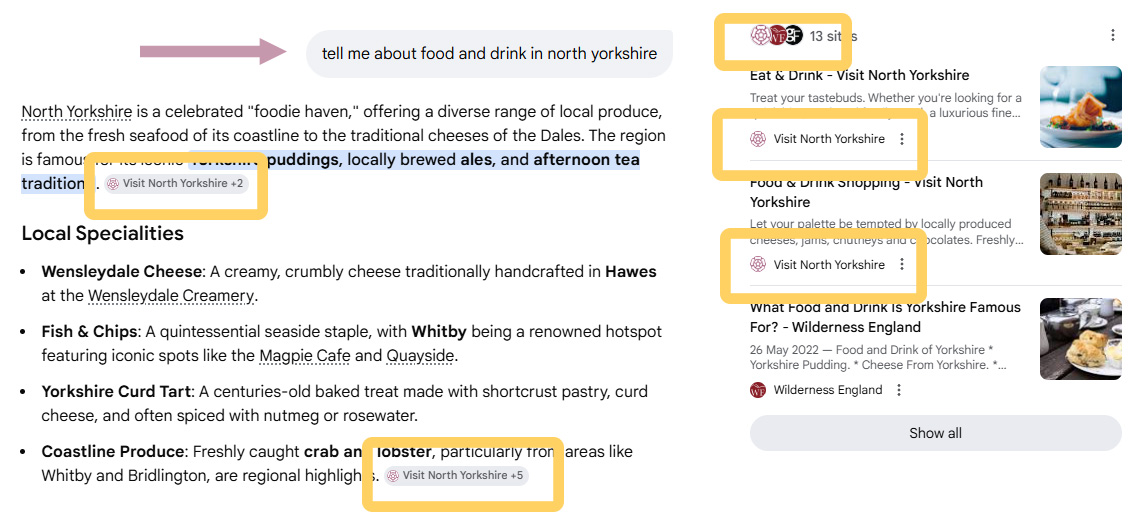
This is especially important now that so many answers come from AI tools and Google's AI-generated summaries rather than a list of links. These tools pull information from sources that are clearly structured and well-marked — it's much easier for them to "read" and quote a schema-marked destination profile than to interpret an ordinary business website.
Applying this correctly takes technical know-how most individual businesses don't have the time, budget, or expertise to maintain — especially as the standards keep changing. It's applied and kept up to date across the whole of Visit North Yorkshire as standard, so every profile benefits without the business having to do or understand any of it themselves.
One profile, many places it appears
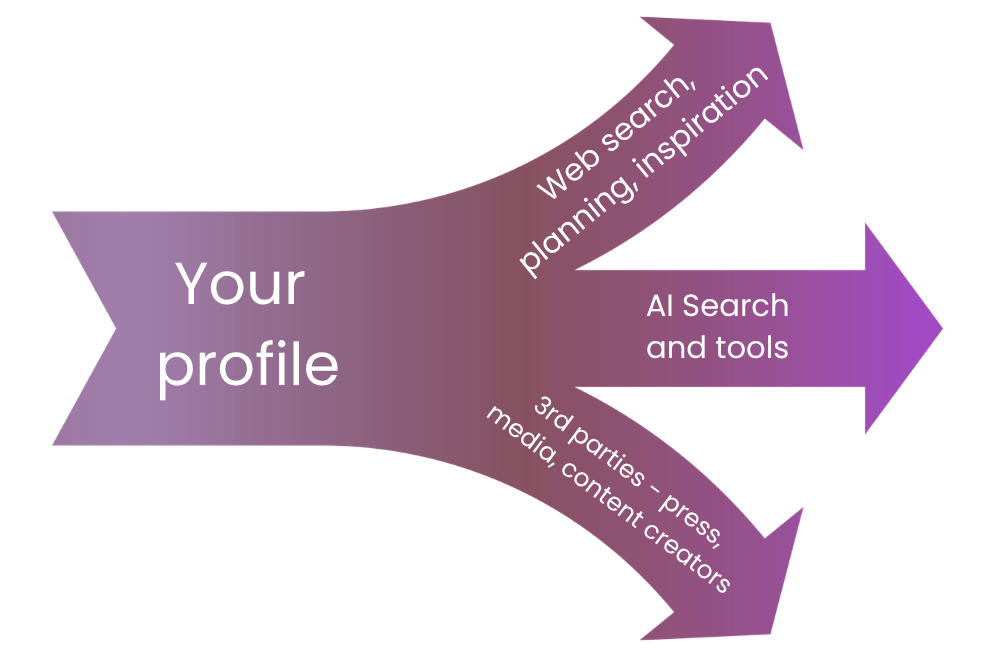
The destination website is a content platform, not a single page. Because your profile is built with schema behind it, that same structured information can be pulled out and reused wherever people are actually searching and discovering — not just on the website itself.
In practice, that means one profile can feed area guides, itineraries, maps, FAQ content, recommendation journeys, and search results or AI-generated answers — all from the same underlying data, set up once.
This is what gives you a genuine chance to be part of a visitor's journey even if they never visit the destination website directly. They might see your opening hours in a map result, get pulled into an AI-generated answer about "best things to do," or appear in a curated itinerary — all without ever clicking through to the site itself. That reach isn't something a standalone business website can replicate on its own.
Part of a working network
Destination Core engages and collaborates directly with search engines and platforms on structured data and visibility — at a scale no individual business could access alone. The improvements this leads to, benefit every profile on the site, not just the largest.
Much of this is only possible because of the work we at DestinationCore do directly with Google's Strategic Partnerships team, helping shape best practice around structured data and destination visibility as search and AI discovery evolve.
That means the schema behind every DestinationCore profile isn't guesswork — it's built in step with how Google and AI systems actually want destination content published, and kept current as those standards change, across every site on the platform.
Launched in 2019 by the Jacob Bailey Group, DestinationCore combines more than 20 years of destination marketing expertise with a UX-first heritage, and is trusted by more than 90 destinations across the UK and US to build websites that keep pace with modern discovery, structured data, and high-intent visitor journeys.
For more insight like this, follow DestinationCore on LinkedIn: https://www.linkedin.com/company/destinationcore
and for more insights from Will Wright, you can also follow him : https://www.linkedin.com/in/will-wright79/
Inspired to update your business profile page? Get started here